Using YouTube Transcripts to Create Real-Life Learning Materials
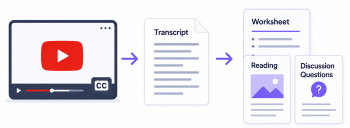
Använd YouTube:s automatiskt genererade transkriptioner tillsammans med ChatGPT för att skapa autentiska läs-, lyssnings- och ordförrådsövningar utifrån verkligt videoinnehåll för vuxna språkinlärare.
DigCompEdu-Kompetensområde(n)
2 Digitala resurser, 3 Undervisning och lärande
Tid
Förberedelsetid: 20 minuter
Genomförande: 45 min
Utbildningspersonals Nivå
Utforskare och Integrerare
Målgrupp
Vuxna språkinlärare Nivå B1–B2
Minimikrav på Elevernas Digitala Färdigheter
Grundläggande
Minimikrav på Elevernas Språknivå
B1-C2
🎓 Lärandemål
Eleverna kommer att kunna
- Utvinna och använda YouTube-transkriptioner för att skapa autentiskt språkinlärningsmaterial.
- Utveckla läsförståelse och ordförråd med hjälp av verkliga videoklipp.
- Använda AI-verktyg för att skapa differentierade aktiviteter baserade på autentiska texter.
Ingredienser
| Objekt / Resurs | Antal | Syfte |
|---|---|---|
| YouTube-video med automatiskt genererade undertexter | 1 per lektion | Källa till autentisk transkripttext |
| ChatGPT (gratis eller betald version) | 1 per lärare | För att skapa aktiviteter utifrån transkriptet |
| Enheter med internetåtkomst | 1 per deltagare | För att komma åt YouTube och ChatGPT |
| Ordbehandlingsprogram eller Google Docs | 1 per lärare | För att formatera och dela ut material |
Utrustning
- Dator eller surfplatta med internetuppkoppling
- YouTube-konto (krävs inte för att titta)
- ChatGPT-konto (gratisversionen räcker)
🥣 Förberedelser – före genomförandet
- Välj en YouTube-video som är relevant för ditt lektionsämne (nyheter, dokumentär, utbildningsinnehåll).
- Kontrollera att videon har automatiskt genererade eller manuella undertexter tillgängliga.
- Öppna transkriptet: klicka på de tre punkterna under videon och välj ”Öppna transkript”.
- Kopiera transkriptionstexten och klistra in den i ChatGPT för att skapa en övning.
🔥 Steg för implementering (i klassrummet/synkront)
- Visa YouTube-videon för klassen (med eller utan undertexter beroende på nivå).
- Dela ut transkriptet eller en förenklad version som lästext.
- Använd förståelsefrågor genererade av ChatGPT för diskussion eller skriftliga uppgifter.
- Ge eleverna ordförrådsövningar baserade på nyckelord som hämtats från transkriptet.
- Be eleverna att identifiera nyckelfraser eller idiom och diskutera deras betydelse i sammanhanget.
- Valfritt: Be eleverna sammanfatta videon med egna ord.
🧂 Anpassning och inkludering
- För lägre nivåer: Tillhandahåll en förenklad version av transkriptet med förklaringar till nyckelord.
- För högre nivåer: Be eleverna att identifiera övertygande språk eller retoriska grepp.
- För blandade grupper: Ge olika läsförståelseuppgifter utifrån kunskapsnivå.
🥄 Bedömning och återkoppling
| Kriterium | Utmärkt | Bra | Behöver förbättras |
| Förståelse och noggrannhet | Svaren visar fullständig förståelse av videons innehåll | Svaren visar på delvis förståelse med vissa luckor | Svaren visar på begränsad förståelse av innehållet |
| Ordförråd | Använder nyckelord från transkriptet korrekt i sammanhanget | Använder vissa ord er korrekt med mindre fel | Ordförrådet är begränsat eller används felaktigt |
| Engagemang i autentiskt material | Engagerar sig aktivt i videon och transkriptet genomgående | Engagerar sig i större delen av materialet med viss uppmaning | Minimalt engagemang i det autentiska materialet |
⚠️ Etik, integritet och säkerhet
- Se till att de videor som används är lämpliga för elevgruppen och fria från skadligt innehåll.
- Kontrollera upphovsrätt och licensvillkor innan du delar ut utdrag ur transkriptet.
- Dela inte personuppgifter om eleverna med AI-verktyg.
- Tänk på att automatiskt genererade undertexter kan innehålla fel; granska dem alltid innan du använder dem.
🍱 Fördjupning / Uppföljningar
- Be eleverna att själva hitta YouTube-videor om ett visst ämne och skapa en kort aktivitet för klassen.
- Skapa en resursbank med utvalda YouTube-videor och färdiga aktiviteter.
🔗 Ämnesövergripande koppling
- Använd transkriptioner från nyhetsvideor för att utveckla elevernas mediekunskap.
Referenser och resurser
YouTube: https://www.youtube.com
ChatGPT: https://chat.openai.com